Kto umawiał się z Jules César?
Postumia umawiał się z Jules César od ? do ?. roku
Postumia umawiał się z Jules César od ? do ?. roku
Mamurra umawiał się z Jules César od ? do ?. roku
Mucia Tertia umawiał się z Jules César od ? do ?. roku
Lollia umawiał się z Jules César od ? do ?. roku
Serwilia umawiał się z Jules César od ? do ?. roku
Cossutia umawiał się z Jules César od ? do ?. roku
Sempronia umawiał się z Jules César od ? do ?. roku
Eunoë umawiał się z Jules César od ? do ?. roku
Clodia umawiał się z Jules César od ? do ?. roku
Tertulla umawiał się z Jules César od ? do ?. roku
Nysa umawiał się z Jules César od ? do ?. roku
Cleopatra umawiał się z Jules César od do . roku Różnica wieku wynosiła 30 lata, 6 miesięcy i 10 dni.
Jules César

Jules César (en latin : Caius Iulius Caesar à sa naissance, Imperator Iulius Caesar Divus après sa mort), aussi simplement appelé César, est un conquérant, homme d'État et écrivain romain, né le 12 ou le à Rome et mort le (aux ides de mars) dans la même ville.
Son parcours unique, au cœur du dernier siècle de la République romaine — bouleversée par les tensions sociales et les guerres civiles —, marque le monde romain. Ambitieux, il s'appuie sur le courant réformateur et démagogue (populares) pour favoriser son ascension politique. Stratège et tacticien, il repousse, à l'aide de ses armées, les frontières de la République romaine jusqu'au Rhin et à l'océan Atlantique en conquérant la Gaule, puis utilise ses légions pour s’emparer du pouvoir au cours de la guerre civile l’opposant à Pompée, son ancien allié, puis aux républicains.
Acclamé comme un imperator favorisé des dieux, seul maître à Rome après une suite de victoires foudroyantes sur ses adversaires, il entreprend de réformer l’État et satisfait les revendications de la mouvance des populares. Pour ce faire, il concentre progressivement de nombreux pouvoirs exceptionnels, adossés à une politique de culte de la personnalité inédite reposant sur ses ascendances divines et sa fortune personnelle.
Adoré du peuple, pour qui il fait montre de largesses frumentaires, économiques et foncières, il se fait nommer dictateur, d'abord pour dix ans avec des pouvoirs constitutionnels, puis à vie. Soupçonné de vouloir instaurer par ces mesures une nouvelle monarchie à Rome, il est assassiné peu après par une conspiration de sénateurs dirigée par Brutus et Cassius. Jules César est néanmoins divinisé.
Son héritage est rapidement l'objet d'une nouvelle guerre civile entre ses partisans et successeurs, Marc Antoine et son fils adoptif par testament, Octave. Triomphant de ses adversaires, Octave achève par sa victoire et par l'élimination des derniers républicains la réforme de la République romaine, qui laisse place au principat. Le nom César devient synonyme de pouvoir. Sa personnalité et son parcours sont l'objet de nombreux récits plus ou moins enjolivés dans les cultures du monde entier ; de même, sont désignées par le terme de « césarisme » les attitudes politiques visant à faire reposer un pouvoir personnel fort sur l'approbation populaire et sur le plébiscite.
Czytaj więcej...Postumia
Jules César
Postumia
Jules César
Mamurra
Mamurra est un chevalier romain, intendant de Jules César dans les Gaules.
Il vivait au Ier siècle av. J.-C, amassa par ses exactions d’immenses richesses, et fit, à son retour, bâtir un palais magnifique sur le mont Cœlius.
Catulle a fait de sanglantes épigrammes contre ce favori de Jules César, justement décrié par ses rapines, par son luxe et par ses débauches. Dacier croit que la ville de Formies, qui, dans la satire V du livre Ier d’Horace, est appelée Mamurrarum urbs, lui appartenait. Mais il est plus probable que ce chevalier romain si décrié y avait seulement pris naissance, et que c’est un trait de satire qu’Horace lance en passant contre Mamurra. Formies dévient ainsi la ville des Mamurres parce que Mamurra l’a rendue célèbre par ses vices et ses déportements. Cela semble d’ailleurs plus dans le goût et le génie d’Horace, qui ne pouvait penser autrement que Catulle et tous les honnêtes gens de Rome sur ce fameux débauché.
Ce Mamurra est appelé ailleurs par Horace decoctor Formianus (le dissipateur, le mangeur de Formies), ce qui indique le cas qu’il en faisait. Il paraît que ce personnage était riche d’ailleurs, et avait à Rome une belle maison. Ce fut lui qui donna le premier, à Rome, l’exemple de faire incruster de marbre les murailles ; d’où cette sorte d’ornement prit en architecture le nom de décoration mamurrine.
Czytaj więcej...Jules César
Lollia
Lollia was an Ancient Roman noblewoman. She was the wife of Roman general Aulus Gabinius. She was also a mistress of Julius Caesar.
Czytaj więcej...Jules César
Serwilia

Serwilia (łac. Servilia) – córka Kwintusa Serwiliusza i Liwii Druzy, siostra przyrodnia Marka Porcjusza Katona, matka Marka Juniusza Brutusa.
Wychowała się w domu swojego wuja, trybuna Marka Liwiusza Druzusa po tym, jak jej rodzice się rozwiedli. Poślubiła Marka Juniusza Brutusa i mieli syna – również Marka Juniusza Brutusa – jednego z zabójców Juliusza Cezara.
Później poślubiła Decymusa Juniusza Sylanusa, konsula w 62 p.n.e., urodziła mu trzy córki – wszystkie nazywały się Junia. Druga Junia poślubiła Marka Emiliusza Lepidusa, przyszłego triumwira. Trzecia Junia, najmłodsza, poślubiła Gajusza Kasjusza Longinusa, kolejnego zabójcę Cezara.
Serwilia była wieloletnią kochanką Cezara, niektóre źródła podają nawet, że jej syn Brutus, był synem Cezara, a inne, że Cezar był ojcem trzeciej z Junii. Ich romans trwał od ok. 63 p.n.e. aż do jego zabójstwa, w 44 p.n.e. Tuż po dokonaniu morderstwa wszyscy mordercy zebrali się w jej domu i radzili, co należy robić dalej. Serwilia uciekła przed triumwirami i po śmierci syna w bitwie pod Filippi, zamieszkała u przyjaciela Cycerona, Tytusa Pomponiusza Attikusa. Oktawian August kazał przysłać prochy jej syna. Serwilia zmarła śmiercią naturalną.
Czytaj więcej...Jules César
Cossutia
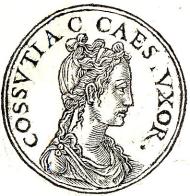
Cossutia was a Roman woman who became engaged to Julius Caesar prior to his reaching adulthood. There has been debate among historians on whether the marriage actually occurred.
Czytaj więcej...Jules César
Sempronia

Sempronia war eine römische Aristokratin der späten Republik. Sie war die Frau des Decimus Iunius Brutus, Konsul des Jahres 77 v. Chr., und nach Sallust aktive Teilnehmerin – zumindest Mitwisserin – an der catilinarischen Verschwörung.
Czytaj więcej...Jules César
Eunoë

Eunoé Maura (en berbère : ⴰⵡⵙⵏⵓⴼⴰ - Ausnufa) était une reine berbère de Maurétanie et épouse du roi Bogud.
Aussi connue sous le nom d'Euryes, Euries ou Eunoa.
Czytaj więcej...
Jules César
Clodia
Klodia (Clodia Maior; ur. ok. 95 p.n.e.) – siostra Publiusza Klodiusza, rzymskiego polityka, wraz z którym wyrzekła się patrycjuszowskiego pochodzenia. Wywodziła się z arystokratycznej rodziny rzymskiej.
Czytaj więcej...Jules César
Tertulla
Jules César
Nysa
Ниса (др.-греч. Νύσα) — дочь царя Вифинии Никомеда IV (по другим, видимо, устаревшим сведениям — Никомеда III), жившая в I веке до н. э.
Czytaj więcej...Jules César
Cleopatra
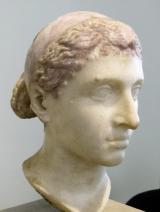
Kleopatra VII Filopator (stgr. Κλεοπάτρα Φιλοπάτωρ; ur. 69 rok p.n.e., zm. 12 sierpnia 30 roku p.n.e. w Aleksandrii) – ostatnia królowa hellenistycznego Egiptu, panująca w latach 51–30 p.n.e.
Nosiła tytuły: „Królowa, Nowa Bogini, Bogini Miłująca Ojca, Bogini Miłująca Ojczyznę”. Była córką Ptolemeusza XII Auletesa. Po wstąpieniu na tron poślubiła swego brata Ptolemeusza XIII. Wskutek dworskich intryg opuściła Egipt i udała się do Palestyny, gdzie zdobyła poparcie Cezara, z którym miała syna, Ptolemeusza XV Cezariona. Dzięki interwencji wojskowej Cezara powróciła na tron egipski. Po śmierci Ptolemeusza XIII, który zginął na skutek zamieszek antyrzymskich w Aleksandrii, Kleopatra poślubiła drugiego brata, Ptolemeusza XIV. Z nim odbyła podróż do Rzymu w celu wzmocnienia więzi politycznych pomiędzy obydwoma państwami. Po śmierci Cezara powróciła do Egiptu i rozkazała zamordować małżonka, po czym objęła rządy w imieniu małoletniego Cezariona.
W trwającej w Rzymie wojnie domowej Kleopatra poparła zwolenników Oktawiana Augusta i Marka Antoniusza. W 42 roku p.n.e. osobiście poznała tego drugiego, czego skutkiem był długoletni związek uczuciowy. W późniejszym konflikcie pomiędzy Oktawianem a Antoniuszem opowiedziała się za kochankiem, z którym miała troje dzieci: bliźnięta Aleksandra Heliosa i Kleopatrę Selene oraz syna Ptolemeusza Filadelfosa. Oktawian w bitwie pod Akcjum w 31 roku p.n.e. pokonał połączone siły Antoniusza i Kleopatry, po czym wkroczył do Egiptu. Kleopatra po nieudanych pertraktacjach ze zwycięzcą, polegających na dążeniu do zapewnienia władzy w Egipcie swoim potomkom, 12 sierpnia 30 roku p.n.e. popełniła samobójstwo.
Czytaj więcej...