Kto umawiał się z Olivia Shakespear?
William Butler Yeats umawiał się z Olivia Shakespear od ? do ?. roku Różnica wieku wynosiła 2 lata, 2 miesięcy i 27 dni.
Olivia Shakespear
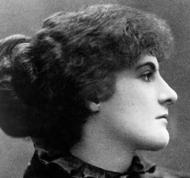
Olivia Shakespear (née Tucker; 17 March 1863 – 3 October 1938) was a British novelist, playwright, and patron of the arts. She wrote six books that are described as "marriage problem" novels. Her works sold poorly, sometimes only a few hundred copies. Her last novel, Uncle Hilary, is considered her magnum opus. She wrote two plays in collaboration with Florence Farr.
Olivia was the daughter of a retired adjutant general, and had little formal education. She was well-read however, and developed a love of literature. In 1885 she married London barrister Henry Hope Shakespear, and in 1886 gave birth to their only child, Dorothy. In 1894 her literary interests led to a friendship with William Butler Yeats that became physically intimate in 1896. He declared that they "had many days of happiness" to come, but the affair ended in 1897. They nevertheless remained lifelong friends and corresponded frequently. On October 20, 1917, Yeats married Georgie Hyde-Lees, Olivia Shakespear's step-niece and Dorothy's best friend.
Olivia began hosting weekly salons frequented by Ezra Pound and other modernist writers and artists in 1909, and became influential in London literary society. Olivia's daughter Dorothy Shakespear married Pound in 1914, despite the less than enthusiastic blessing of her parents. After their marriage, Pound used funds received from Olivia to support T. S. Eliot and James Joyce. When Dorothy gave birth to a son, Omar Pound, in France in 1926, Olivia assumed guardianship of the boy. He lived with Olivia until her death twelve years later, in 1938.
Czytaj więcej...William Butler Yeats

William Butler Yeats, W.B. Yeats (wym. [ˈjeɪts]; ur. 13 czerwca 1865 w Dublinie, zm. 28 stycznia 1939 w Roquebrune-Cap-Martin) – irlandzki poeta, dramaturg i filozof, tworzący w języku angielskim, czołowy twórca i działacz literackiego Odrodzenia Irlandzkiego. Motywy swych utworów czerpał z wczesnośredniowiecznej literatury irlandzkiej i folkloru, pozostawał jednocześnie pod wpływem romantycznego wizjonerstwa Blake’a, okultyzmu, prerafaelitów i francuskiego symbolizmu; laureat Nagrody Nobla w dziedzinie literatury (1923).
Czytaj więcej...