Kto umawiał się z Berthe de Courrière?
Auguste Clésinger umawiał się z Berthe de Courrière od ? do ?. roku Różnica wieku wynosiła 37 lata, 7 miesięcy i 10 dni.
Rémy de Gourmont umawiał się z Berthe de Courrière od ? do ?. roku Różnica wieku wynosiła 5 lata, 10 miesięcy i 3 dni.
Georges Ernest Boulanger umawiał się z Berthe de Courrière od ? do ?. roku Różnica wieku wynosiła 15 lata, 1 miesięcy i 3 dni.
Berthe de Courrière

Berthe de Courrière (June 1852, Lille – 14 June 1916, Paris) was a French artists' model and demimondaine. She was the mistress, model, and heir of the sculptor and painter Auguste Clésinger.
Czytaj więcej...Auguste Clésinger
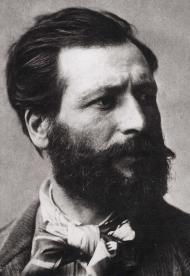
Auguste Clésinger (ur. 22 października 1814 w Besançon, zm. 5 stycznia 1883 w Paryżu) – francuski rzeźbiarz i malarz.
Rzeźbił głównie marmurowe i gipsowe popiersia oraz historyczne, alegoryczne i mitologiczne posągi.
W 1846 roku poznał George Sand, Fryderyka Chopina oraz Solange (córkę George Sand), którą poślubił w Nohant 19 maja 1847 roku za aprobatą jej matki, a ku niezadowoleniu Chopina. Jednak w niedługim czasie nowożeńcy poróżnili się z George i jej synem Maurycym, w efekcie czego zostali wyrzuceni z Nohant. Solange zwróciła się o pomoc do Chopina w tej trudnej dla niej i Clésingera sytuacji, Chopin im tej pomocy udzielił, co w efekcie przyczyniło się do rozpadu jego związku z George Sand.
Od śmierci Fryderyka Chopina do wiosny 1850 roku Clésinger wykonał około 17 prac poświęconych kompozytorowi. Auguste Clésinger jest autorem pomnika nagrobnego Fryderyka Chopina, który znajduje się na cmentarzu Père-Lachaise w Paryżu.
Czytaj więcej...Berthe de Courrière
Rémy de Gourmont

Remy de Gourmont (ur. 4 kwietnia 1858 w Bazoches-au-Houlme, zm. 27 września 1915 w Paryżu) – francuski poeta, powieściopisarz, erudyta i krytyk literacki związany z symbolizmem. Autor powieści Sykstyna.
Czytaj więcej...Berthe de Courrière
Georges Ernest Boulanger

Georges Ernest Jean-Marie Boulanger (29 April 1837 – 30 September 1891), nicknamed Général Revanche ('General Revenge'), was a French Army officer and politician. An enormously popular public figure during the second decade of the Third Republic, he won multiple elections. At the zenith of his popularity in January 1889, he was feared to be powerful enough to establish himself as dictator. His base of support was the working-class districts of Paris and other cities, plus rural traditionalist Catholics and royalists. He advocated revanche (revenge on Germany), révision (revision of the constitution), and restauration (restoration of the monarchy).
The elections of September 1889 marked a decisive defeat for the Boulangists. Changes in the electoral laws prevented Boulanger from running in multiple constituencies, and the aggressive opposition of the established government, combined with Boulanger's self-imposed exile, contributed to a rapid decline of the movement. The decline of Boulanger severely undermined the political strength of the conservative and royalist elements of French political life; they would not recover strength until the establishment of the Vichy regime in 1940. The defeat of the Boulangists ushered in a period of political dominance by the Moderate Republicans.
Academics have attributed the failure of the movement to Boulanger's own weaknesses. Despite his charisma, he lacked coolness, consistency, and decisiveness; he was a mediocre leader who lacked vision and courage. He was never able to unite the disparate elements, ranging from the far left to the far right, that formed the base of his support. He was able, however, to frighten republicans and force them to reorganize and strengthen their solidarity in opposition to him.
Czytaj więcej...