Kto umawiał się z Voltairine de Cleyre?
Samuel H. Gordon umawiał się z Voltairine de Cleyre od ? do ?. roku
Dyer Lum umawiał się z Voltairine de Cleyre od ? do ?. roku Różnica wieku wynosiła 27 lata, 9 miesięcy i 2 dni.
Voltairine de Cleyre
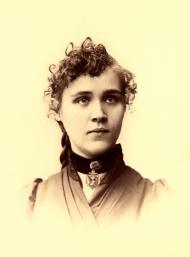
Voltairine de Cleyre (ur. 17 listopada 1866 w Leslie w stanie Michigan, zm. 20 czerwca 1912 w Chicago) – amerykańska pisarka, mówczyni i działaczka anarchistyczna, która sprzeciwiała się kapitalizmowi, instytucji małżeństwa i państwu, jak również dominacji religii nad seksualnością i życiem kobiet, które postrzegała jako wzajemnie powiązane. Ze względu na swoje poglądy jest często określana jako jedna z głównych wczesnych feministek.
Urodzona i wychowana w małych miasteczkach stanu Michigan i uczona w katolickim klasztorze w Ontario, de Cleyre rozpoczęła swoją karierę aktywistki w ruchu wolnomyślicielskim. Choć początkowo pociągał ją anarchizm indywidualistyczny, de Cleyre ewoluowała poprzez mutualizm do tego, co nazywała anarchizmem bezprzymiotnikowym, przedkładając ponad wszystko społeczeństwo bezpaństwowe, bez użycia agresji czy przymusu.
De Clayre żyła w tym samym czasie co Emma Goldman, z którą utrzymywała stosunki oparte na pełnym szacunku pomimo różnicy zdań w niektórych kwestiach. Wiele esejów de Cleyre zostało zebranych w Selected Works of Voltairine de Cleyre, wydanych pośmiertnie przez magazyn „Mother Earth” w 1914.
Czytaj więcej...Samuel H. Gordon
Samuel H. Gordon (1871–1906) was a Russian-American physician. Having emigrated to the United States in the early 1890s, he joined the Jewish anarchist movement in Philadelphia and began taking lessons in the English language from Voltairine de Cleyre. Before long, he was engaged in a romantic relationship with her and participated in her anarchist activism, but their relationship quickly became strained after she rejected his marriage proposal. de Cleyre herself paid his way through medical school and he graduated as a Doctor of Medicine in 1898, after which he left the anarchist movement and broke up with de Cleyre. When de Cleyre was hospitalized by an assassination attempt in 1902, he refused to help her, which ostracized him further from the anarchist movement. Gordon died from gastritis in 1906.
Czytaj więcej...Voltairine de Cleyre
Dyer Lum
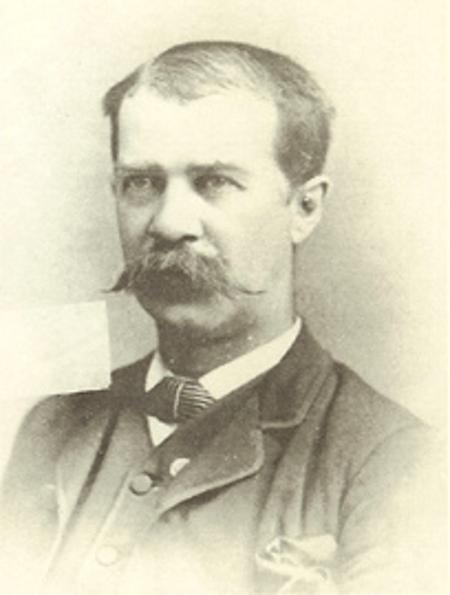
Dyer Daniel Lum (February 15, 1839 – April 6, 1893) was an American labor activist, economist and political journalist. He was a leading figure in the American anarchist movement of the 1880s and early 1890s, working within the organized labor movement and together with individualist theorists.
Born into an abolitionist family, Lum voluntarily enlisted in the Union Army during the American Civil War, in which he fought for the abolition of slavery. After the war, he plied his trade as a bookbinder in New England and became involved in the nascent spiritualist movement, although he soon became skeptical of organized religion and converted to Buddhism. At this time, he became involved in the growing political reform movement, joining the Greenback Party and lobbying for the institution of the eight-hour day, as well as monetary and land reforms.
By the early 1880s, he had become disillusioned by third party politics and moved towards revolutionary socialism and individualist anarchism. He joined the International Working People's Association (IWPA) and the Knights of Labor, within which he advocated for workers organization to push for economic reform and political revolution. Lum was deeply affected by the Haymarket affair, as he was close friends with many of the defendants, including Albert Parsons, Adolph Fischer and Louis Lingg, the latter of whom he helped commit suicide in order to avoid execution. Lum's involvement in the affair became a source of criticism from Chicago anarchists, who accused him of displaying a cavalier attitude towards revolutionary martyrdom, as well as the individualist Boston anarchists, who were alienated by his advocacy of revolutionary violence. Lum attempted to use his position to bridge the divide between the two factions, but was ultimately unsuccessful.
After Haymarket, he moved away from advocating violent revolution and became more closely involved in trade union organizing, which he thought provided a means through which to achieve a free association of producers and anarchy. He became an influential figure within the American Federation of Labor (AFL), encouraging its anti-political stance and practice of voluntary association. At this time, he developed a political programme that called for the implementation of mutualist economics through workers' organization and revolutionary tactics. But by the early 1890s, he was overcome by depression and suicidal ideations. He committed suicide in 1893, months before the pardoning of the Haymarket defendants.
Czytaj więcej...