Kto umawiał się z Andy Warhol?
Jed Johnson umawiał się z Andy Warhol od ? do ?. roku Różnica wieku wynosiła 20 lata, 4 miesięcy i 24 dni.
John Giorno umawiał się z Andy Warhol od ? do . roku Różnica wieku wynosiła 8 lata, 3 miesięcy i 28 dni.
Andy Warhol

Andy Warhol (ur. 6 sierpnia 1928 w Pittsburghu, zm. 22 lutego 1987 w Nowym Jorku) – amerykański artysta, jeden z głównych przedstawicieli pop-artu, znany przede wszystkim z prostych i seryjnych kompozycji o wysokim kontraście kolorystycznym, do których używał techniki serigrafii. Powstałe dzięki tej metodzie sitodruki prezentują produkty konsumpcyjne z przeciętnej amerykańskiej lodówki, tj.: puszki Coca-Coli czy zupy pomidorowej Campbell, oraz przedmioty z życia codziennego, np. maki, banany, pudełka proszku Brillo. Serigrafia umożliwiła Warholowi odtwarzanie wystylizowanych portretów największych gwiazd świata rozrywki, do których należeli: Brigitte Bardot, Marilyn Monroe, Elvis Presley, Jacqueline Kennedy Onasis, Marlon Brando, Elizabeth Taylor. Tworzył także wizerunki innych powszechnie znanych postaci, którymi byli wówczas Mao Zedong, Włodzimierz Lenin czy Joseph Beuys. Andy Warhol traktował wszystko co malował przedmiotowo i bez zbędnych emocji. Proszek Brillo i banknoty dolarowe miały dla niego taką samą wartość jak podobizny ludzi mu współczesnych – wszystko to artykuły konsumpcyjne społeczeństwa amerykańskiego, przedmioty pop.
Czytaj więcej...Jed Johnson

Jed Johnson (December 30, 1948 – July 17, 1996) was an American interior designer and film director. He first came to prominence through his close association with Pop artist Andy Warhol before becoming recognized for his influential design work. The New York Times hailed him as "one of the most celebrated interior designers of our time."
Raised in California, Johnson moved to New York in 1968, where he began working at Warhol's Factory performing odd jobs. Following an assassination attempt on Warhol, Johnson moved in with the artist to help with his recovery, and the two maintained a romantic partnership for 12 years. At the Factory, Johnson progressed from assisting Warhol and director Paul Morrissey to directing his own film, Bad (1977). He also edited several notable works, including Trash (1970), Heat (1972), Flesh for Frankenstein (1973), and Blood for Dracula (1974). After Warhol's death, Johnson was a founding member of the Andy Warhol Art Authentication Board.
In addition to his work in film, Johnson became a highly acclaimed interior designer. Beginning with the decoration of the townhouse he shared with Warhol, he developed a distinctive style that combined minimalist elegance with bold, dramatic accents. He collected antiques and built a high-profile clientele that included Mick Jagger, Pierre Bergé, Yves Saint Laurent, and Barbra Streisand. Johnson's career was cut short when he was killed in the explosion of TWA Flight 800 in 1996.
Leaving behind a lasting impact on contemporary interior design, Johnson was posthumously inducted into the Interior Design Hall of Fame. Architectural Digest later named him as one of "The World's 20 Greatest Designers of All Time." In 2005, Rizzoli published Jed Johnson: Opulent Restraint, Interiors, a monograph and tribute by his twin brother, Jay Johnson, documenting his work.
Czytaj więcej...Andy Warhol
John Giorno
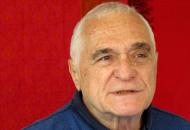
John Giorno (December 4, 1936 – October 11, 2019) was an American poet and performance artist. He founded the not-for-profit production company Giorno Poetry Systems and organized a number of early multimedia poetry experiments and events. Giorno's creative journey was marked by collaborations, groundbreaking initiatives, and a deep exploration of diverse art forms. He gained prominence through his association with pop art luminary Andy Warhol, sparking a creative partnership that propelled his career to new heights.
Giorno's artistic evolution was shaped by his encounters with Warhol and other influential figures. His notable appearance in Warhol's 1964 film Sleep, where he slept on camera for over five hours, introduced audiences to his unique blend of performance and artistic expression. Giorno's creative trajectory was marked by an array of multimedia poetry experiments, one of which was the pioneering "Dial-A-Poem" project. This venture allowed individuals to access brief poems by contemporary poets via telephone, forging a novel connection between technology and poetry.
Collaboration was a hallmark of Giorno's work, as he joined forces with renowned artists, including William S. Burroughs, Patti Smith, Laurie Anderson, Philip Glass, and Robert Mapplethorpe. His poetic style evolved over time, encompassing techniques such as appropriation, cut-ups, and montage. His signature double-column poems, characterized by repetition, mirrored the vocal distortions he employed in his performances. As Giorno's career progressed, his work began to incorporate political themes, notably his active protests against the Vietnam War.
Beyond his artistic endeavors, Giorno embraced spirituality and activism. A transformative trip to India in 1971 introduced him to Tibetan Buddhism, particularly the Nyingma tradition. He was one of the earliest Western students of Tibetan Buddhism, inviting various Tibetan teachers to New York City and hosting them. As a committed AIDS activist, he founded the AIDS Treatment Project in 1984, providing vital support to those affected by the epidemic. Giorno's impact extended globally, as he continued to perform, collaborate, and exhibit his work, leaving an enduring legacy in the worlds of poetry, performance art, and multimedia exploration.
Czytaj więcej...