Kto umawiał się z Barbara Palmer?
John Churchill, 1st Duke of Marlborough umawiał się z Barbara Palmer od ? do ?. roku Różnica wieku wynosiła 9 lata, 6 miesięcy i 9 dni.
Karol II Stuart umawiał się z Barbara Palmer od do . roku Różnica wieku wynosiła 10 lata, 5 miesięcy i 19 dni.
Barbara Palmer

Barbara Palmer, z domu Villiers (ur. 12 maja 1641, zm. 9 października 1709) – angielska arystokratka, kochanka króla Karola II Stuarta. Była jedynym dzieckiem Williama Villiersa, 2. wicehrabiego Grandison, i Mary Bayning, córki 1. wicehrabiego Bayning.
Czytaj więcej...John Churchill, 1st Duke of Marlborough
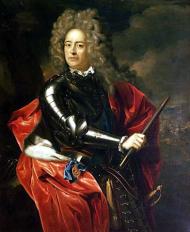
General John Churchill, 1st Duke of Marlborough, 1st Prince of Mindelheim, 1st Count of Nellenburg, Prince of the Holy Roman Empire, (26 May 1650 – 16 June 1722 O.S.) was a British army officer and statesman. From a gentry family, he served as a page at the court of the House of Stuart under James, Duke of York, through the 1670s and early 1680s, earning military and political advancement through his courage and diplomatic skill. He is known for never having lost a battle.
Churchill's role in defeating the Monmouth Rebellion in 1685 helped secure James on the throne, but he was a key player in the military conspiracy that led to James being deposed during the Glorious Revolution. Rewarded by William III with the title Earl of Marlborough, persistent charges of Jacobitism led to his fall from office and temporary imprisonment in the Tower of London. William recognised his abilities by appointing him as his deputy in Southern Netherlands (modern-day Belgium) before the outbreak of the War of the Spanish Succession in 1701, but not until the accession of Queen Anne in 1702 did he secure his fame and fortune.
Marriage to Sarah Jennings and her relationship with Anne ensured Marlborough's rise, first to the captain-generalcy of British forces, then to a dukedom. As de facto leader of Allied forces in the Low Countries, his victories at battles of Blenheim (1704), of Ramillies (1706), of Oudenarde (1708), and of Malplaquet (1709) ensured his place in history as one of Europe's great generals. His wife's stormy relationship with the Queen, and her subsequent dismissal from court, was central to his own fall. Incurring Anne's disfavour, and caught between Tory and Whig factions, Marlborough was forced from office and went into self-imposed exile. He returned to favour with the accession of George I to the throne in 1714, but a stroke in 1716 ended his career.
Marlborough's leadership of the main Allied army against Louis XIV from 1701 to 1711 helped to consolidate Britain's emergence as a front-rank power, while his ability to maintain unity in the fractious coalition demonstrated his diplomatic skills. He is often remembered by military historians as much for his organisational and logistic skills as his tactical abilities. Marlborough's military exploits have resulted in successive historians describing him as one of the finest military commanders in history.
Czytaj więcej...Barbara Palmer
Karol II Stuart

Karol II (ur. 29 maja 1630 w St. James’s Palace, Londyn, zm. 6 lutego 1685 w Whitehall, Londyn) – król Anglii i Szkocji w latach 1649–1685 (de iure) lub 1660–1685 (de facto), syn Karola I Stuarta, króla Anglii i Szkocji i Henrietty Marii, córki Henryka IV Burbona, króla Francji.
Czytaj więcej...